Shoulder Replacement Surgery
Posted onTrustindex verifies that the original source of the review is Google. Best orthopedic doctor in Bareilly Meri beti ko cervical se bahut chakkar aur dard tha,bahut haldi araam mil giyaPosted onTrustindex verifies that the original source of the review is Google. Best ortho in bareilly . Meri mummy ka kulha ki haddi tut gai thee, doctor sahab ne bahut hi kam kharch mein chote cheere se operation kar diya aur wo dusre din se chal rahin hain aur bilkul theek hainPosted onTrustindex verifies that the original source of the review is Google. He is one of the best Doctor. We are very much satisfied with the treatment. I must say .....Every staff member of this clinic was very helpful throughout the treatment. Thank you 😊Posted onTrustindex verifies that the original source of the review is Google. Very excellent. Very reliable Doctor. Nature is excellent and treatment is not expensive.Posted onTrustindex verifies that the original source of the review is Google. best orthopedic for fracture ayushman patient very good carePosted onTrustindex verifies that the original source of the review is Google. Hamari mummy 65 saal ki hain. Slip disc + both-knee osteoarthritis ke saath daily kaam mushkil ho gaya tha. Dr Manoj Agarwal Clinic me very less medicines, detailed precautions, aur physiotherapy-based exercises mile. Posture correction, weight management aur home routine clear tha. 3–4 hafte me pain/stiffness kam hui, ab seedhiyan dheere-dheere aur daily walk possible. Approach long-term aur practical hai. Highly satisfied. ⭐⭐⭐⭐⭐Posted onTrustindex verifies that the original source of the review is Google. Walking Without Pain After Months – Grateful for Dr. Agarwal! Knee osteoarthritis ki wajah se main roz ke kaam mushkil se karta tha, stairs aur walking mein dard hota tha. Dr. Manoj Agarwal sir ne medication, exercise guidance aur lifestyle advice se hi pain kaafi control kar diya. Surgery ki zarurat nahi padi abhi. Sir bahut experienced, samajhdaar aur caring hain, aur unka clinic well-equipped hai.He is the Best ortho doctor in Bareilly.Posted onTrustindex verifies that the original source of the review is Google. Leg Numbness Gone – Back to Work Comfortably! Slip disc ke wajah se leg numbness aur back pain ho raha tha. Dr. Manoj Agarwal sir ne OPD treatment aur physiotherapy plan se symptoms bahut kam kar diye. Ab daily kaam comfortably ho raha hai. Sir ka nature caring aur clinic facilities excellent hain. He is best in ortho and spine care.Verified by TrustindexTrustindex verified badge is the Universal Symbol of Trust. Only the greatest companies can get the verified badge who has a review score above 4.5, based on customer reviews over the past 12 months. Read more
Shoulder Replacement Surgery
Shoulder replacement surgery is a highly effective orthopedic procedure designed to relieve chronic pain, restore shoulder function, and improve the quality of life for patients suffering from severe shoulder joint issues. This advanced surgery replaces damaged or diseased parts of the shoulder joint with artificial components, ensuring better movement and long-term relief.
What is Shoulder Replacement Surgery?
Shoulder replacement surgery involves replacing the damaged surfaces of the shoulder joint with prosthetic components made of metal and plastic. The procedure is tailored to the patient’s specific condition, and the type of replacement depends on the extent of joint damage.
Types of Shoulder Replacement Surgery:
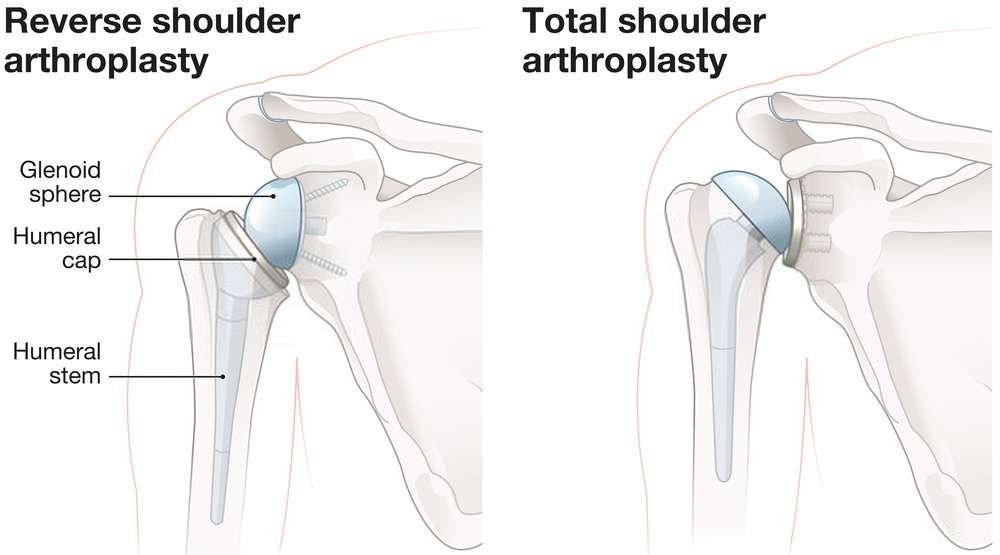
- Total Shoulder Replacement (Anatomic): Replaces both the humeral head (upper arm bone) and the glenoid (socket) with prosthetics.
- Reverse Shoulder Replacement: Ideal for patients with severe rotator cuff damage; the positions of the ball and socket are reversed to allow other muscles to compensate for the damaged rotator cuff.
- Partial Shoulder Replacement (Hemiarthroplasty): Only the damaged humeral head is replaced, leaving the socket intact.
- Resurfacing Arthroplasty: A less invasive option where only the damaged joint surface is replaced with a metal cap.
Types of Knee Replacement Surgery:
- Total Knee Replacement (TKR): The entire knee joint is replaced, including the femur (thigh bone), tibia (shin bone), and sometimes the patella (kneecap).
- Partial Knee Replacement (PKR): Only the damaged part of the knee joint is replaced, preserving healthy bone and tissue.
- Revision Knee Replacement: A secondary surgery to replace or repair a previously implanted knee prosthesis.
- Robotic-Assisted Knee Replacement: A minimally invasive option using robotic technology for enhanced precision.
When is Shoulder Replacement Recommended?
This surgery is typically recommended for individuals experiencing:
- Chronic shoulder pain that limits daily activities.
- Advanced arthritis, including osteoarthritis or rheumatoid arthritis.
- Severe fractures or trauma to the shoulder joint.
- Rotator cuff arthropathy (shoulder arthritis due to a torn rotator cuff).
- Failed previous shoulder surgeries.
Benefits of Hip Replacement Surgery
- Pain Relief: Drastically reduces or eliminates chronic knee pain.
- Improved Mobility: Restores the ability to walk, climb stairs, and perform daily tasks.
- Enhanced Quality of Life: Allows patients to return to an active lifestyle.
- Long-Lasting Results: Modern implants can last 15-20 years or more with proper care.
Benefits of Shoulder Replacement Surgery
- Pain Relief: Significant reduction or elimination of chronic pain.
- Improved Range of Motion: Enhanced ability to perform daily tasks and recreational activities.
- Long-Term Results: Modern prosthetic joints last 15-20 years or more.
- Better Quality of Life: Restores independence and overall functionality.
If You Need Any Help Contact With Us
+91-9358008080Latst Blog
No posts found.
Our Services
- Tennis Elbow
- Gout Treatment
- Spondylitis Treatment
- Arthritis Treatment
- ACL Reconstruction
- Fracture Treatment
- Rotator Cuff Tear Surgery
- Sports Injuries
- Spine Surgeons
- Slip Discs (spinal conditions)
- Hip Replacement Surgery
- Knee Replacement Surgery
- Shoulder Replacement Surgery
- Paediatric Orthopaedic
- Limb Lengthening
- Frozen Shoulder
- Joint Replacement Surgery
- Arthroscopic Knee Surgery